
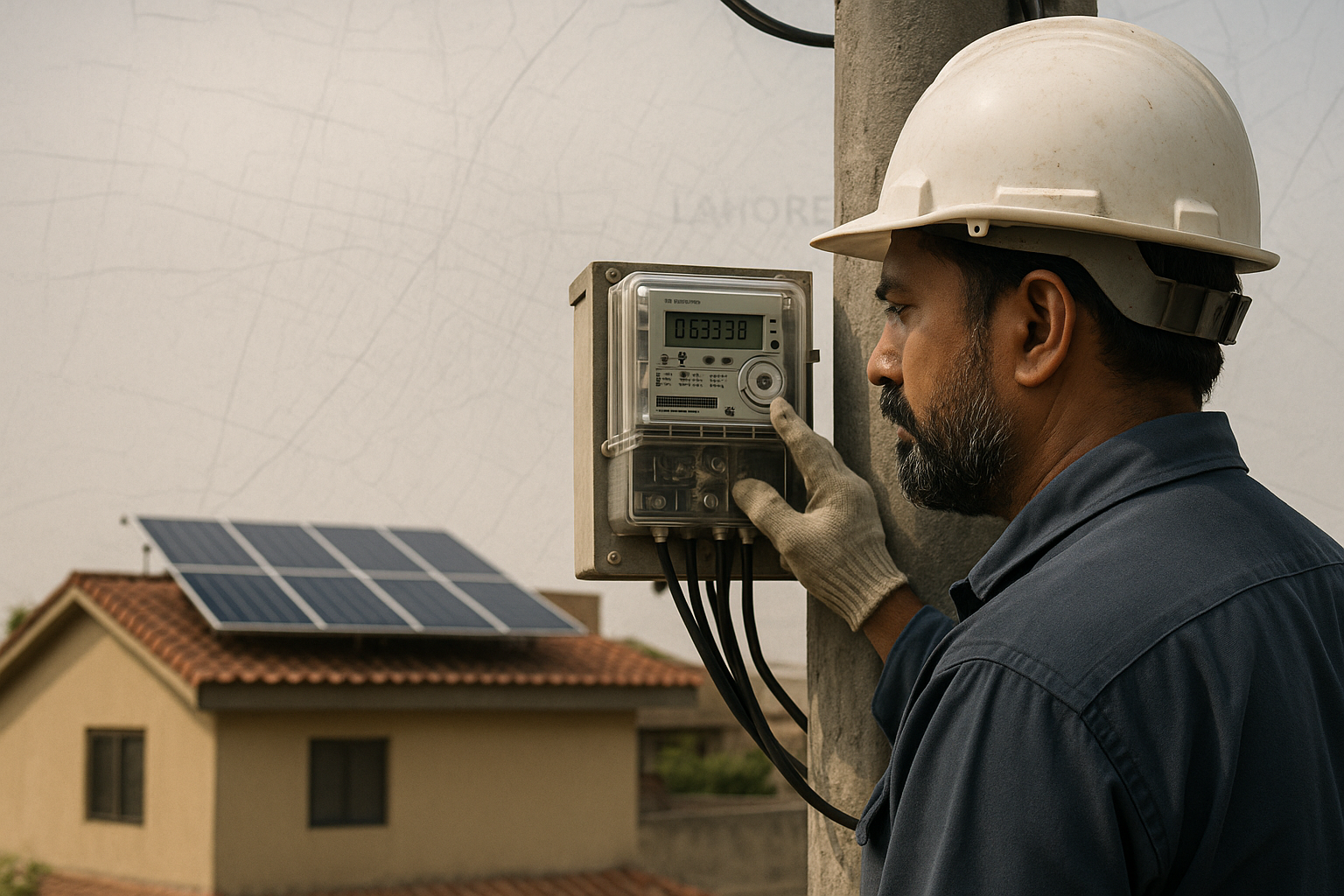
LESCO Net-Metering & Consumer Support 2025: Solar Impact, Grid Stability, and BISP CNIC Validation for Utility Relief
Solar adoption and electricity affordability have become two of the biggest concerns for LESCO-region consumers in 2025. As more households install rooftop solar and participate in net-metering, many families — especially low-income groups — continue relying on government support programs like BISP 8171.
This article combines the latest national updates on net-metering, grid impact, and consumer subsidies, while also explaining how BISP CNIC Validation through 8171 Web Portal sytem helps eligible families manage electricity expenses, track payments, and remain part of safety-net programs.
The goal is simple:
Provide a complete, single resource for LESCO consumers navigating solar billing, electricity costs, and income-support verification.
Is Net-Metering Hurting the National Grid? Govt Says No
The government has officially confirmed that net-metering — even with rapid solarization — is not harming the national grid.
During NEPRA’s 2026 PPP rebasing hearing, CPPA CEO Rehan Akhtar stated clearly:
“Solar generation is increasing, but this does not have a significant impact on the grid. Consumers’ grid offtake has not changed.”
Key points from the hearing:
- Net-metering injection jumped 173% in 2024
(from 266 million units → 726 million units) - DISCO demand growth was only 1%
- Karachi’s K-Electric increased grid offtake by 9.4%
- National grid withdrawals remain stable
- Solar homes still rely on the grid during evenings & low production hours
For LESCO consumers, this confirms that solar net-metering is not being restricted and there is no official plan to withdraw support.
Why Net-Metering Matters for LESCO Consumers?
LESCO-region households are turning to solar for three reasons:
- rising electricity unit prices
- heavy fuel adjustments
- the ability to offset bills through export units
Consumers exporting power during peak sunshine hours enjoy significant reductions in their monthly LESCO bills, and in some cases, produce surplus credit.
With the government confirming no negative grid impact, net-metering remains a stable and long-term viable solution.
How BISP 8171 CNIC Validation Supports Utility & Solar Consumers
Millions of low-income households in Punjab, including LESCO consumers, depend on BISP 8171 for financial support.
In 2025, BISP introduced strict CNIC Validation requirements to ensure accurate eligibility and smooth payment release.
This affects electricity consumers in several ways:
Helps low-income families pay their utility bills
Beneficiaries receive regular stipends that often support basic expenses, including electricity.
Required for solar financing & subsidy programs
Many future solar-support schemes will rely on validated CNIC + NSER data.
Ensures accurate electricity relief targeting
Government relief packages (fuel adjustment waivers, tariff assistance) use BISP & NSER data for identification.
Reduces delays in receiving BISP cash needed for bill payments
Accurate validation ensures uninterrupted support.
BISP 8171 CNIC Validation 2025 – Quick Guide
The validation system links your CNIC with NSER data to determine eligibility and payment status.
How to Validate Your CNIC?
- Visit the official 8171 web portal
- Enter your CNIC
- Click Verify
- Check your eligibility status
- Follow any update instructions (if needed)
CNIC validation helps:
- confirm identity
- approve eligibility
- reduce payment delays
- ensure secure bank withdrawals
- fix mismatched family information
LESCO consumers dependent on BISP should complete validation immediately to avoid interruptions in support.
Payment Tracking Through CNIC Validation
Once the CNIC is validated, beneficiaries can check:
- next payment release date
- assigned bank (HBL / Bank Alfalah)
- pending biometric verification
- complete payment cycle history
This helps families plan bill payments—especially during months with high FPA (Fuel Price Adjustment).
Comparison of BISP Verification Methods
| Verification Method | Requirements | Speed | Best For |
|---|---|---|---|
| CNIC Online Inquiry | CNIC only | Fast | Eligibility + payments |
| Biometric Bank Verification | CNIC + fingerprints | Very fast | Cash withdrawal |
| SMS 8171 | CNIC + phone | Medium | Quick updates |
| Desk Verification | CNIC + documents | Slow | Record corrections |
How Both Systems Link Together?
LESCO-region consumers benefit from both developments:
Net-Metering → Reduces electricity bills
BISP CNIC Validation → Ensures timely financial support
Combined → Makes electricity more affordable
Households that struggle with rising electricity costs can offset their bills through solar exports, while BISP beneficiaries receive verified, secure payments for essential expenses.
This merged framework ensures:
- grid stability
- payment transparency
- consumer empowerment
- access to solar relief programs
Final Thoughts
LESCO consumers today face two major realities:
- Solar adoption is rising fast
- Many families still depend on income-support programs
With the government confirming that net-metering is stable and not harmful to the grid, rooftop solar remains one of the strongest ways to reduce long-term electricity bills.
At the same time, the updated BISP CNIC Validation 2025 system ensures that low-income households stay eligible for financial assistance without delays — supporting essential needs such as utility payments.
Both developments work together to improve affordability, stability and transparency for LESCO-region consumers in 2025.
FAQs
1. Does net-metering affect my LESCO electricity bill?
Net-metering reduces your LESCO bill by subtracting the units you export from the units you consume. Your monthly bill still includes fixed charges and taxes, but the energy cost drops based on exported solar units.
2. Can BISP beneficiaries install solar systems under LESCO net-metering?
Yes. LESCO does not restrict net-metering based on income-support programs. BISP beneficiaries can install solar systems, apply for metering approval, and export surplus electricity like all other consumers.
3. Does BISP 8171 CNIC validation impact LESCO net-metering eligibility?
No. CNIC validation under BISP 8171 is only for social support eligibility. It does not affect LESCO net-metering approvals, which are based on load, wiring standards, and system safety checks.
4. Why is CNIC validation important even for solar users?
Whether you are a regular LESCO consumer or a solar net-metering applicant, your CNIC must match WAPDA and NADRA records. Updated CNIC data reduces verification delays during meter installation, bill payments, and complaint handling.
5. Has the government confirmed that net-metering does not hurt the national grid?
Yes. The CPPA officially stated that net-metering has not harmed Pakistan’s grid stability. Solar adoption is rising, but grid offtake from residential consumers remains stable.
6. Can LESCO reject a net-metering application due to high solar output?
LESCO approves applications based on transformer load, safety compliance, system design and inverter certification, not consumer income or energy savings. High output alone does not lead to rejection.
7. How can I check my LESCO bill while tracking my BISP 8171 payments?
LESCO bills can be checked through the online bill portal, while BISP payments are verified through the 8171 web portal after CNIC validation. Both systems operate independently.
8. Can solar net-metering reduce the need for BISP assistance?
Solar reduces electricity costs, and lower utility expenses can ease the financial pressure on low-income households. However, BISP eligibility is based on NSER records, not on electricity bills or solar ownership.
9. Does LESCO offer any relief or discount for BISP beneficiaries?
BISP itself doesn’t give an electricity discount. However, LESCO follows government-issued subsidies and tariff adjustments. If any relief is announced for low-income households, BISP beneficiaries may qualify automatically through CNIC-based records.
10. Are solar-export units counted in the same way across all LESCO regions?
Yes. LESCO uses the same NEPRA-approved net-metering mechanism across Lahore, Sheikhupura, Okara, and Kasur. Exported units are credited based on your meter’s real-time bidirectional reading.