
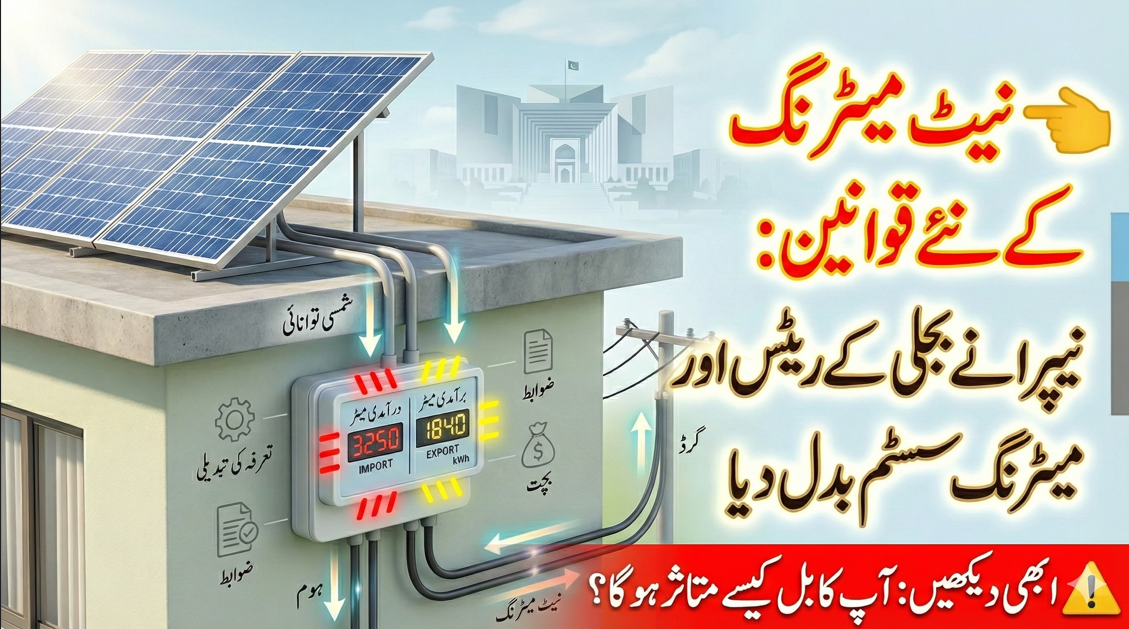
NEPRA Introduces New Net Metering Rules for Solar and Renewable Energy Users in Pakistan
The National Electric Power Regulatory Authority (NEPRA) has introduced new regulations to restructure how electricity is purchased from and supplied to net metering users, commonly known as prosumers.
These updated rules apply to users generating electricity through solar, wind, or biogas systems and will impact both new applicants and existing net metering customers once their current agreements expire.
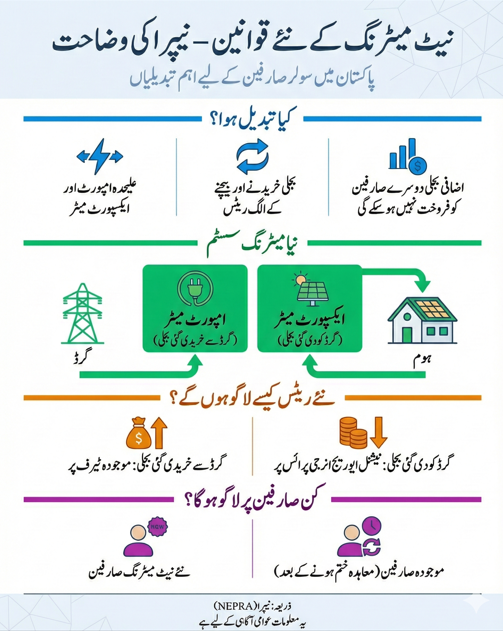
Separate Tariffs for Buying and Selling Electricity
Under the revised framework, NEPRA has ended the single-rate adjustment system for net metering.
Electricity transactions will now work as follows:
- Electricity supplied to the grid by prosumers will be purchased by distribution companies at the National Average Energy Purchase Price
- Electricity drawn from the grid by the same users will be billed at standard consumer tariff rates
This change directly affects how much financial benefit net metering users can expect from exporting surplus electricity.
Mandatory Separate Meters for Import and Export
NEPRA has also mandated the installation of separate electricity meters for:
- Power imported from the grid
- Power exported back to the grid
This replaces the earlier single-meter adjustment system and allows utilities to measure consumption and generation independently.
Prosumers Cannot Sell Electricity to Other Consumers
A major policy shift under the new rules is that excess electricity cannot be sold to other consumers.
Prosumers are now limited to:
- Using generated electricity for self-consumption
- Selling surplus electricity only to the grid
Direct energy transfers between private users are no longer permitted.
Limits on Electricity Generation Capacity
The regulations also restrict electricity generation based on load capacity.
Key points:
- Users cannot generate more electricity than their approved load
- NEPRA retains the authority to review and reassess generation capacity
- Oversized systems may face regulatory adjustments
This ensures grid stability and prevents disproportionate energy injection into the system.
Impact on Existing Net Metering Users
For consumers already operating under net metering agreements:
- Existing contracts will remain valid until expiry
- New rules will apply once agreements are renewed
- Selling excess electricity to other users will no longer be allowed
This represents a significant change from previous net metering guidelines.
Why NEPRA Introduced These Changes
NEPRA states that the updated regulations are designed to:
- Standardize distributed generation operations
- Ensure fair electricity pricing
- Maintain national grid stability
- Manage the rapid growth of net metering across Pakistan
The authority aims to balance renewable energy adoption with long-term grid sustainability.
What Electricity Consumers Should Do Next
Consumers using or planning to install net metering systems should:
- Review updated NEPRA net metering regulations
- Recalculate return expectations for solar installations
- Ensure meter and load compliance with distribution companies
- Monitor electricity bills and tariff changes carefully
You can also check and verify your latest electricity bill details online through our home page, which provides guided access to official billing systems for Pakistani electricity consumers.
Editorial Disclaimer
This article is for informational purposes only. lesco.net.pk is not affiliated with NEPRA or any electricity distribution company. Regulatory decisions and tariffs are subject to official notifications and may change over time.