
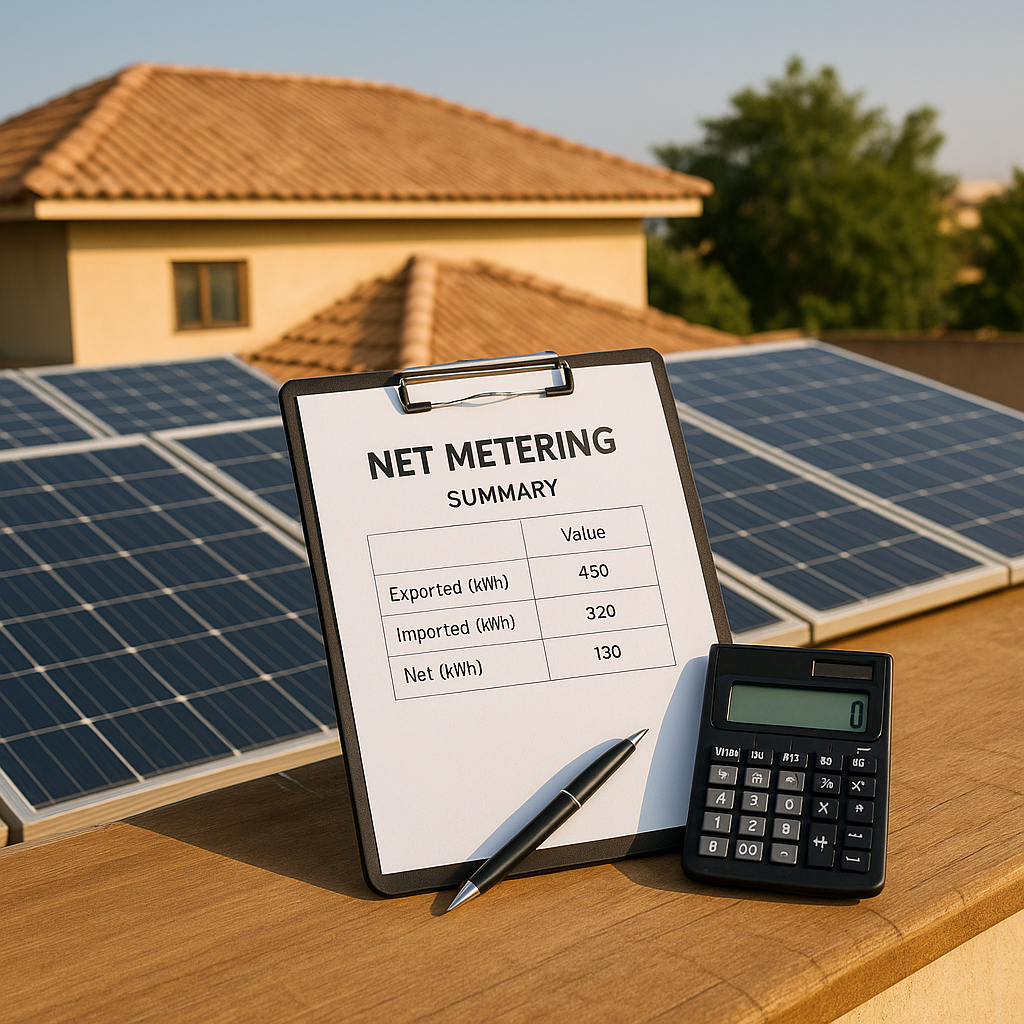
Understanding Your LESCO Bill as a Solar Net Metering Consumer
If you’re a LESCO customer using solar net metering, your electricity bill might look a little different than it used to. Between units imported, exported, adjusted, and credited, it can be confusing to know exactly how much you’re paying — or saving.
Your LESCO bill reflects both imported and exported energy. You pay for the net difference — and may even earn credits if you export more than you import.
What Is Net Metering in the LESCO Billing Context?
Net metering is a billing arrangement where solar panel owners can send excess electricity back to the LESCO grid. This exported electricity is measured and subtracted from your imported usage.
The net meter records imported and exported units to calculate your net consumption.
If you’re new to the concept, first read How to Apply for Net Metering with LESCO.
Key Sections of a LESCO Net Metering Bill
| Bill Section | What It Means |
|---|---|
| Import Units | Units of electricity consumed from LESCO |
| Export Units | Surplus solar units sent back to the grid |
| Net Units | Import – Export (if positive) |
| Carried Forward Units | Surplus units to be used as credit in future months |
| Net Billing Amount | What you owe or are credited after export adjustment |
| Peak/Off-Peak Rates | Rate difference if you’re on Time-of-Use (TOU) billing |

Example Breakdown: How It Works
Let’s say in one month:
- You import 300 units from LESCO
- You export 250 units back to the grid
Net units = 300 – 250 = 50 units
→ You pay LESCO for 50 units only.
If you export more than you import, the excess is carried forward as a credit — it doesn’t go to waste.
How to Read Adjustments and Credits?
| Field | Explanation |
|---|---|
| Current Month Export | Units sent back to grid this month |
| Previous Export Balance | Units carried over from last month |
| Adjustment | Deducted from your import bill |
| Net Payable Amount | Final amount due (may be zero if export covers it) |
Note: You won’t receive cash for surplus units, just credits applied against future consumption.
What Happens in Winter or Low Solar Months?
During months with lower solar generation (like December or January), your import units may increase, reducing your export credits. That’s when your carried-forward credits from high-sunlight months become valuable.
Monitor your usage with the LESCO online portal or mobile app to stay ahead of changes.
Understanding your LESCO bill as a net metering customer empowers you to track your savings, optimize usage, and make better energy decisions. With time, reading your bill becomes second nature — and a source of satisfaction as you watch your energy independence grow.
Frequently Asked Questions (FAQs)
1. Can I get paid in cash for surplus units?
No. LESCO applies unit credits, not cash payments.
2. Do export units expire?
Credits may expire after 12 months if not used, check with LESCO for updated policy.
3. What if my net bill is negative?
You won’t receive a refund, the value is rolled forward to cover future bills.
4. Does TOU metering affect solar net metering?
Yes. Exported units may be valued lower during off-peak hours, while imported units during peak hours cost more.
5. Can I switch back to regular metering?
Technically yes, but it involves application and disconnection of the net meter.