
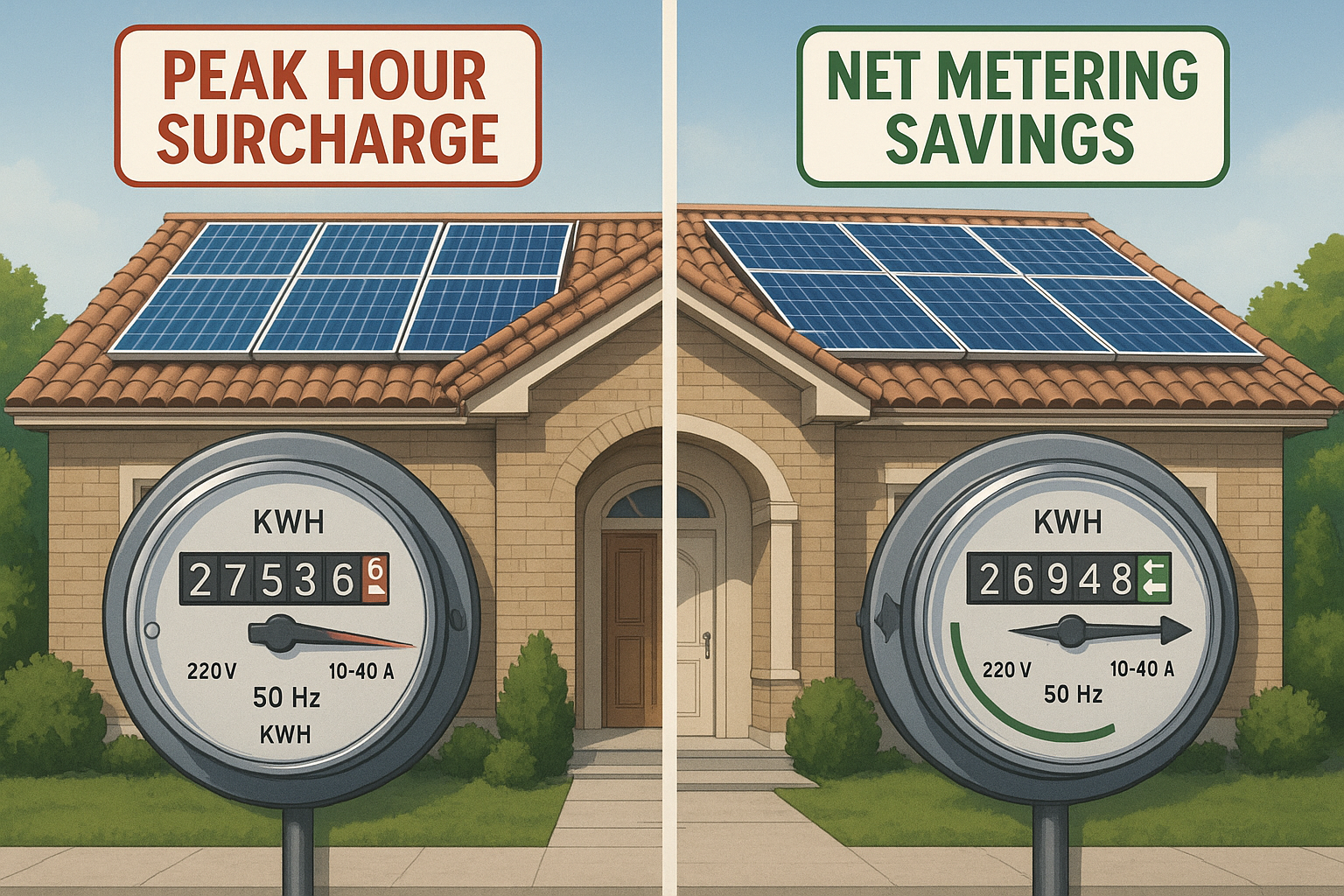
Peak Hour Surcharges vs Net Metering: What Solar Users Should Know
If you’re a LESCO consumer or a solar panel owner in Pakistan, you’ve probably noticed how electricity billing has evolved, especially with peak hour surcharges vs net metering now being a big part of the conversation. While both terms affect your monthly LESCO bill, they work in very different ways, and understanding the difference can help you optimize your energy usage and savings.
What Are Peak Hour Surcharges?
Peak hour surcharges are additional charges applied during specific times of the day when electricity demand is at its highest, usually in the evening.
For LESCO, the peak hours often run from 6 PM to 10 PM (exact hours may change seasonally), and electricity consumed during this time is billed at a higher per-unit rate.
This means that if you run high-consumption appliances like air conditioners, water motors, or ovens during peak hours, your bill will increase significantly.
Key Takeaways:
- Charged only during peak demand times.
- Designed to reduce grid strain and encourage off-peak usage.
- Affects consumers without solar and solar users who rely on grid power during peak hours.
What Is Net Metering?
Net metering is a billing arrangement where your solar panel system is connected to the LESCO grid. It allows you to:
- Export surplus electricity generated by your solar system to the grid.
- Offset imported units from the grid when your solar production is low.
At the end of the month, Like Gas authotrities check ssgc bill, LESCO calculates the net difference between your imported and exported units using LESCO Bill Calculator, reducing your total bill.
If you export more than you import, you get credits that can roll over to the next billing cycle.
Peak Hour Surcharges vs Net Metering — Side-by-Side Comparison
| Feature | Peak Hour Surcharges | Net Metering |
|---|---|---|
| Purpose | Control demand during high usage hours | Allow solar users to offset consumption |
| Effect on Bill | Increases cost if high usage in peak hours | Reduces bill by crediting exported units |
| Applies to | All LESCO consumers | Solar users with approved net metering setup |
| Control | Shift usage to off-peak hours | Increase solar generation & optimize export |
| Best Strategy | Run heavy appliances outside peak hours | Produce surplus solar energy in daylight |
How These Two Affect Solar Users
For solar users, net metering can help minimize peak hour costs — but only if your solar generation continues into the evening, or if you store excess power in batteries to use during peak hours.
Without battery storage, you may still need grid electricity during peak hours, which means peak surcharges will still apply.
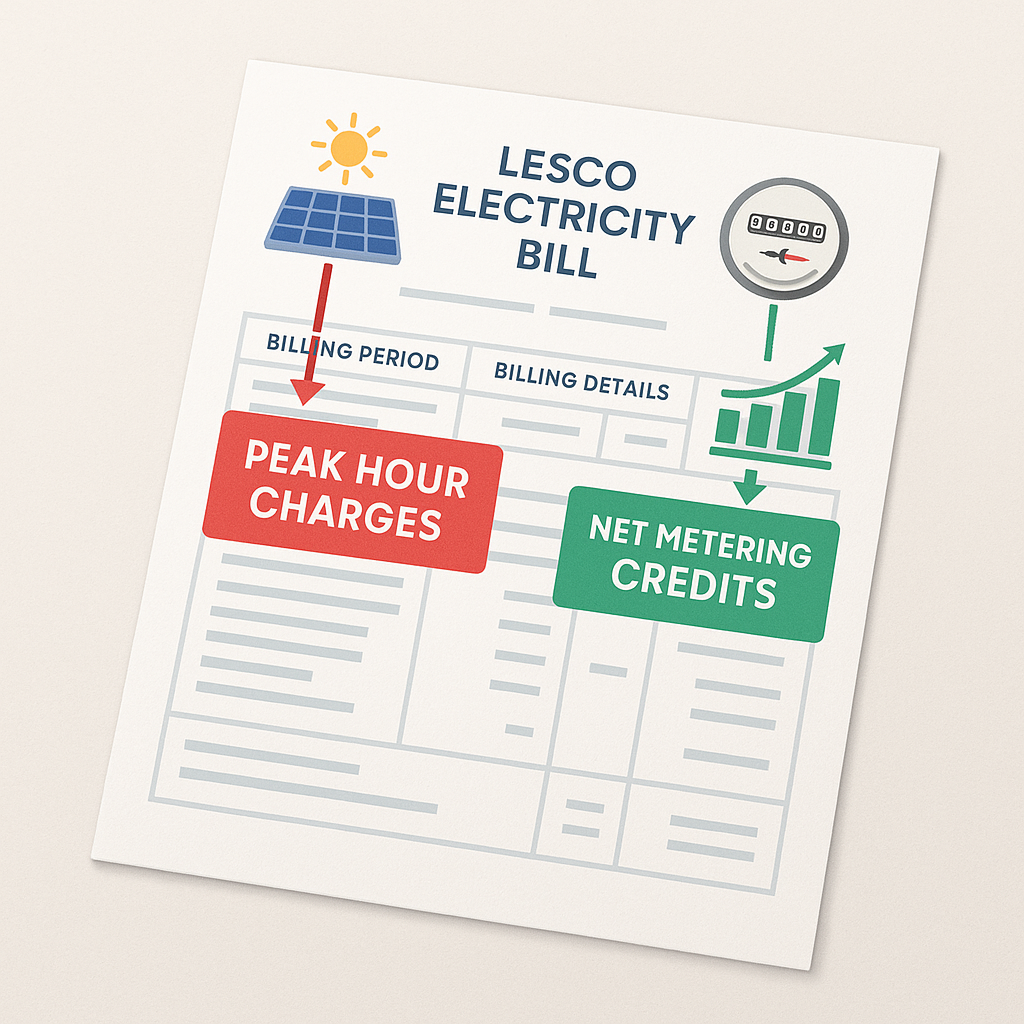
Tips to Reduce Bills Under Both Systems
- Use heavy appliances before or after peak hours.
- Increase solar efficiency with regular maintenance.
- Consider battery storage to cover peak-hour needs.
- Track usage patterns through your LESCO bill.
- Educate family members on cost-saving practices.
Final Word
Understanding the relationship between peak hour surcharges and net metering can help you make smarter decisions about energy use. With careful planning, you can significantly reduce your monthly LESCO bill while getting the most out of your solar investment.
FAQs
What is the difference between peak hour surcharges and net metering in LESCO bills?
Peak hour surcharges are additional charges applied when you consume electricity during LESCO’s high-demand time slots. Net metering, on the other hand, allows solar system owners to export extra solar energy to the grid and receive credits, which can offset their overall electricity bill.
Do LESCO solar net metering users still pay peak hour surcharges?
Yes. Even with net metering, LESCO applies peak hour charges if you consume grid electricity during peak times. To avoid them, your solar system must generate enough power during those hours to meet your full demand.
Can net metering completely eliminate peak hour electricity charges?
Only if your solar system generates surplus energy during peak hours. If you still rely on grid supply at peak times, surcharges will apply. Adding a battery backup can help store daytime solar power for evening peak use.