
Solar Panel Units vs LESCO Units: How They Are Calculated on Net Metered Bills
If you own a solar-powered system with LESCO net metering, you’ve probably looked at your electricity bill and wondered how your solar panel units and LESCO units are actually calculated. Let’s take a deeper look at solar panel units vs lesco units.
Understanding this calculation is not just a curiosity, it directly impacts your savings, your return on investment (ROI), and how quickly you can recover your solar installation cost. Just like strategies in different action games where careful moves lead to winning results, smart energy usage can significantly boost your benefits. In this guide, we break down the calculation method, explain how the net metered billing cycle works, and share tips to optimize your usage for maximum benefit.
What Are Solar Panel Units in Net Metering?
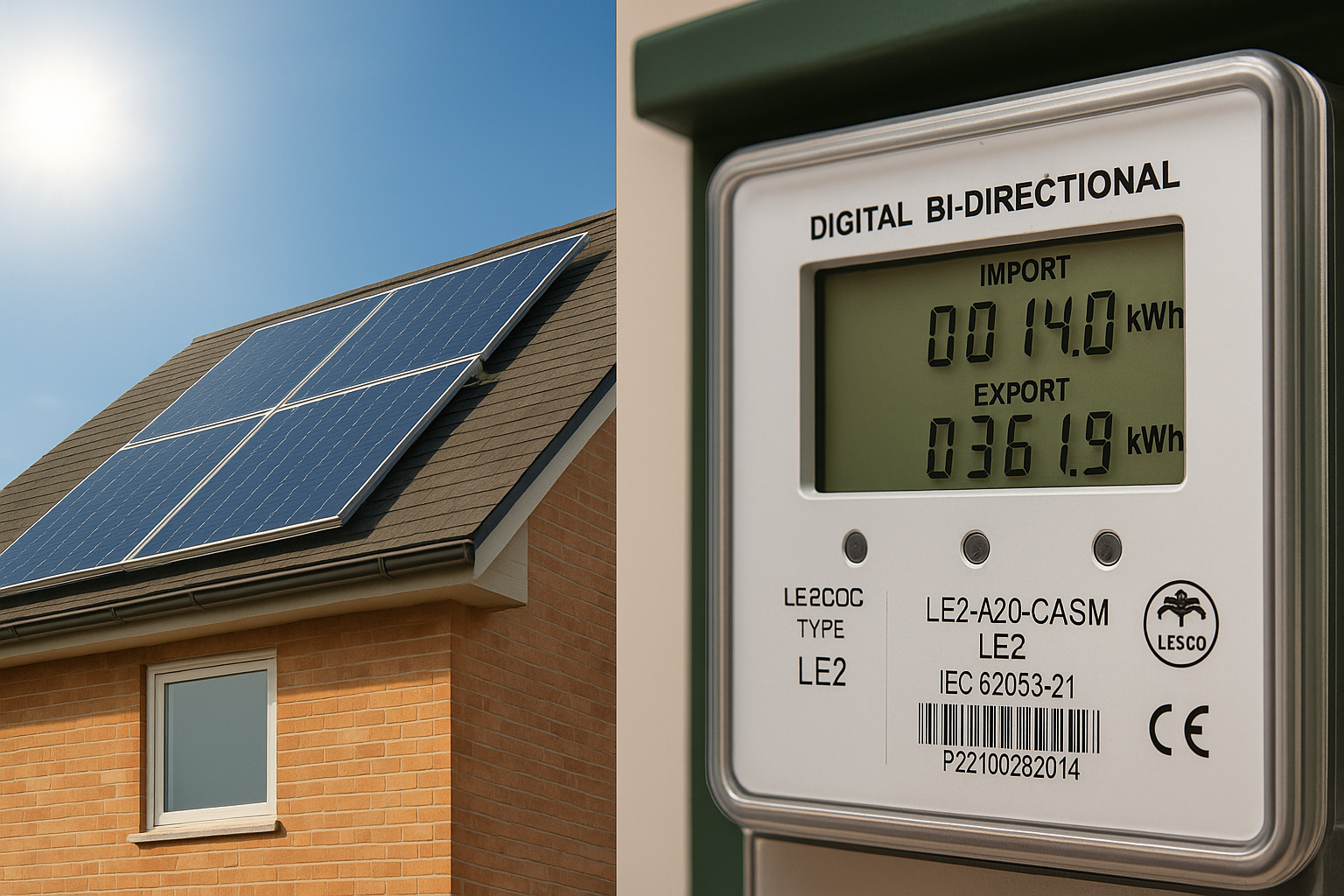
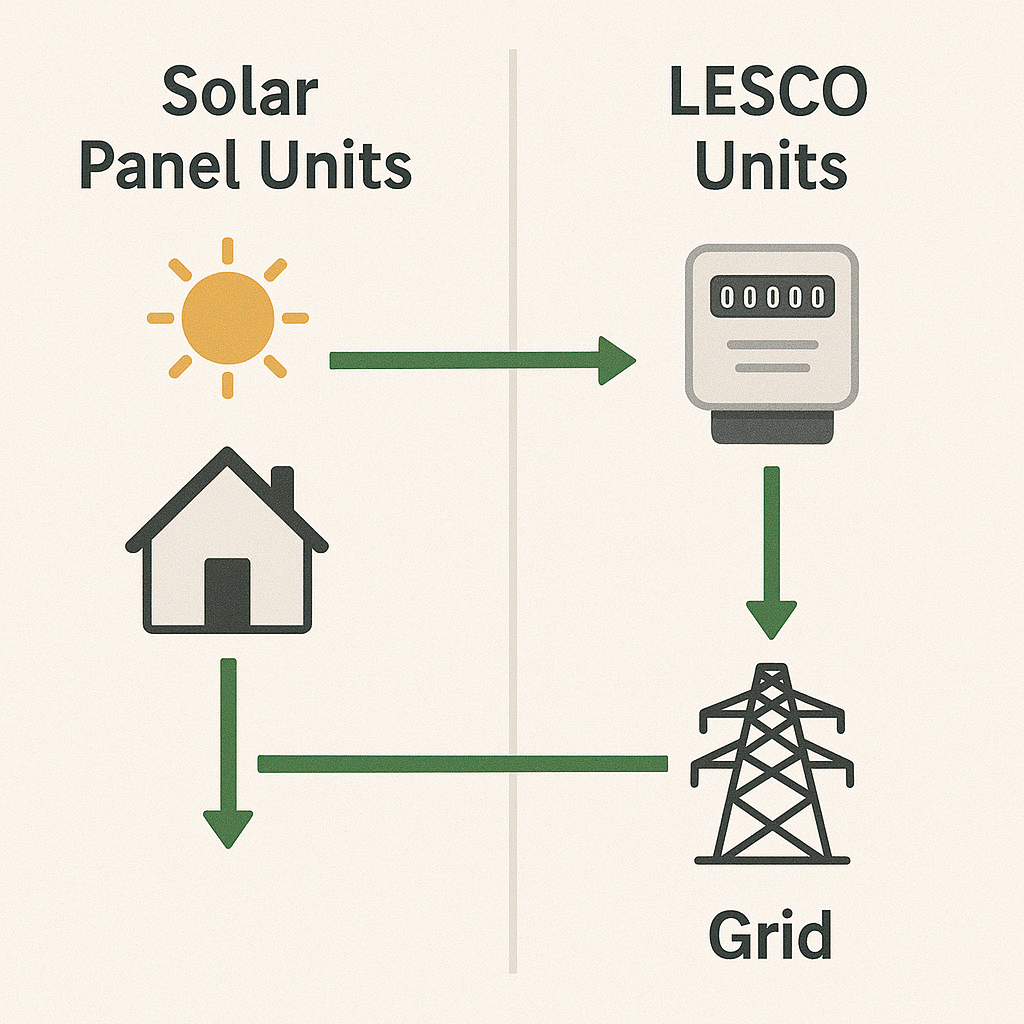
In net metering, solar panel units are the total kilowatt-hours (kWh) your solar system generates, measured by a bidirectional meter. These units can be used instantly in your home or exported to the LESCO grid for credits against your electricity bill.
What Are LESCO Units?
LESCO units are the kilowatt-hours drawn from the LESCO grid when your solar generation is insufficient to meet your home’s demand, such as during night-time or cloudy days. Your bill reflects these units separately from your exported solar units.
How LESCO’s Net Metered Billing Works?
LESCO uses a bi-directional net meter to track both:
- Imported Units — Energy taken from the grid (LESCO units).
- Exported Units — Surplus solar power sent to the grid (solar panel units).
At the end of each billing cycle:
- Exported units are subtracted from imported units.
- If exports exceed imports, credits roll over to the next month.
- If imports exceed exports, you pay for the net difference.
Solar Panel Units vs LESCO Units- Calculation Formula for Net Metered Bills
| Type | Measured By | Formula | Impact on Bill |
|---|---|---|---|
| Imported Units (Grid) | LESCO Net Meter (Import Register) | Grid Supply in kWh | Adds to bill total |
| Exported Units (Solar) | LESCO Net Meter (Export Register) | Solar Supply in kWh | Subtracts from bill |
| Net Units | Imported – Exported | Positive = Payable, Negative = Credit | Determines final bill |
Why the Difference Between Solar and LESCO Units Matters?
Many solar users misunderstand why LESCO units and solar panel units never match exactly. Key reasons include:
- Instant Consumption — Solar power used directly in the home never passes through the net meter, so it’s not recorded as an export.
- Time of Use (TOU) — Peak vs off-peak consumption affects when you import from or export to the grid.
- Inverter Efficiency — Energy loss during DC to AC conversion slightly reduces net exports.
Example Net Metered Bill Calculation
Let’s say for July 2025:
- Solar Generated Units: 900 kWh
- LESCO Imported Units: 300 kWh
- LESCO Exported Units: 500 kWh
Net Units = Imported (300) – Exported (500) = -200 kWh (Credit)
This means you’ll have 200 units to carry forward to the next month LESCO bill. You can use LESCO Bill calculator for calculating your bill easily.
Tips to Maximize Solar ROI with Net Metering
- Shift High-Load Usage to Daylight Hours — Washing machines, water pumps, and air conditioning should run when panels are generating peak power.
- Monitor Generation vs Consumption — Use smart monitoring apps or your inverter display.
- Clean Panels Regularly — Dust can reduce generation by 10–20%.
- Size Your System Right — Over-sizing leads to excess credits with low monetary value; under-sizing increases LESCO dependence.
Common Misconceptions
Do solar panel units always cancel out LESCO units?
No. Instant consumption bypasses the meter, so not all solar units appear as exports.
Does LESCO pay cash for surplus units?
In Pakistan, surplus units are generally credited forward; cash payouts are rare and depend on your net metering agreement.
Is net metering worth it if I have battery storage?
Yes, batteries help reduce imports, but net metering ensures excess daytime production is not wasted.
Understanding the difference between solar panel units and LESCO units helps you make smarter energy decisions, lower your electricity costs, and improve your solar ROI.
Frequently Asked Questions (FAQs)
How does LESCO measure solar panel exports?
LESCO’s bi-directional meter logs all surplus energy sent back to the grid as export units.
Can I track my exported units without waiting for the bill?
Yes, most net meters have a digital display showing export readings, or you can use an inverter monitoring app.
Do seasonal changes affect my LESCO bill?
Yes, summer sunlight increases solar generation and reduces grid imports; winter has the opposite effect.
What’s the difference between gross and net metering?
Gross metering sells all generated power to the grid, while net metering offsets your bill based on the difference between imports and exports.
Can net metering help me avoid peak-hour surcharges?
Partially, daytime solar generation offsets peak-hour imports, but LESCO’s TOU policy still applies.